



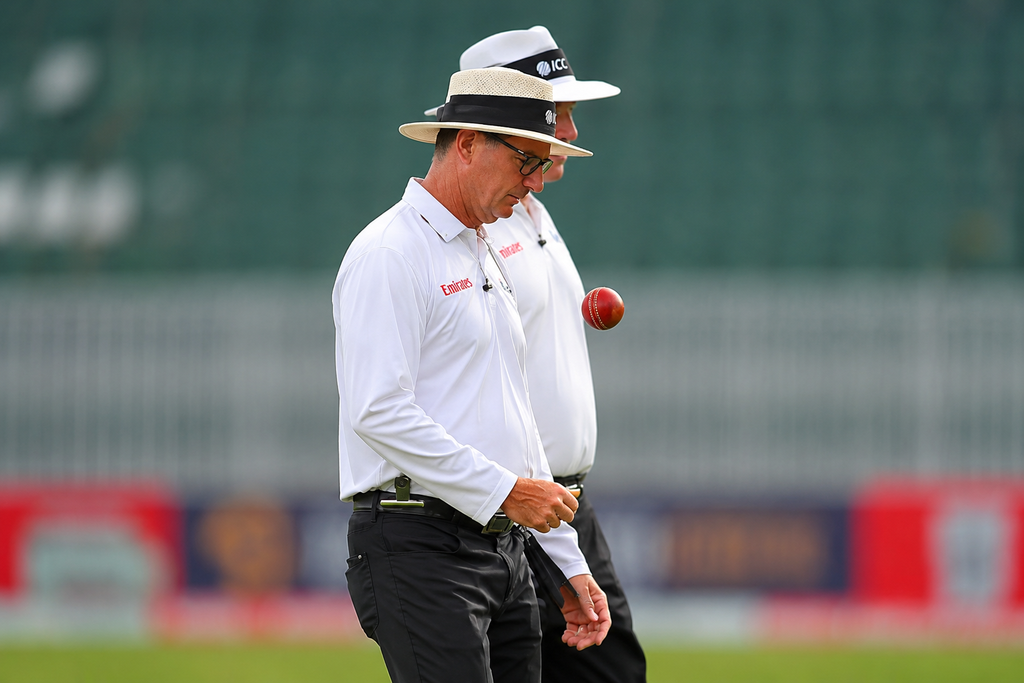
Mike Hesson and Babar Azam believe pink-ball cricket could help Pakistan avoid losing valuable playing time during its home Test season.
RAWALPINDI: Pakistan could turn to pink-ball cricket for future home Tests after poor light and rain severely disrupted the opening match against Sri Lanka, prompting head coach Mike Hesson and captain Babar Azam to call for a fresh look at how Tests are played during the winter months.
The first Test at Rawalpindi ended in a draw on Friday, with nearly 141 overs lost to weather and fading daylight. Only three innings were possible across five days, leaving both teams with little opportunity to force a result.
Hesson believes the newly approved option of using pink balls in daytime Tests deserves serious consideration, particularly when matches are scheduled during Pakistan’s shorter winter days.
“It is certainly something that needs to be talked about for the future series,” Hesson told the host broadcaster after the match.
The Pakistan coach pointed out that poor light is likely to remain a problem at this time of year, regardless of which venue hosts the matches.
With the International Cricket Council (ICC) now allowing pink balls to be used in daytime Tests to reduce interruptions, Hesson believes cricket authorities have an opportunity to rethink their approach.
Babar Azam Welcomes Change but Stresses Preparation
Pakistan captain Babar Azam also welcomed the possibility of using pink balls, although he cautioned against introducing the change without giving players sufficient time to adjust.
Unlike traditional red balls, pink balls behave differently under varying light conditions, making preparation an important part of the transition.
Babar said switching formats at short notice would be difficult, particularly with only a few days separating the two Tests against Sri Lanka.
“A couple of days are not enough to prepare to play a Test with the pink ball,” he said during the post-match presentation.
While supporting the idea as a future option, Babar made it clear that teams would need a proper preparation period before making the switch.
Nearly 141 Overs Lost in Rawalpindi
The weather played a major role throughout the opening Test, with fading daylight repeatedly forcing the players off the field before the scheduled close.
Rain further complicated matters on the fourth day, when play was abandoned during the afternoon.
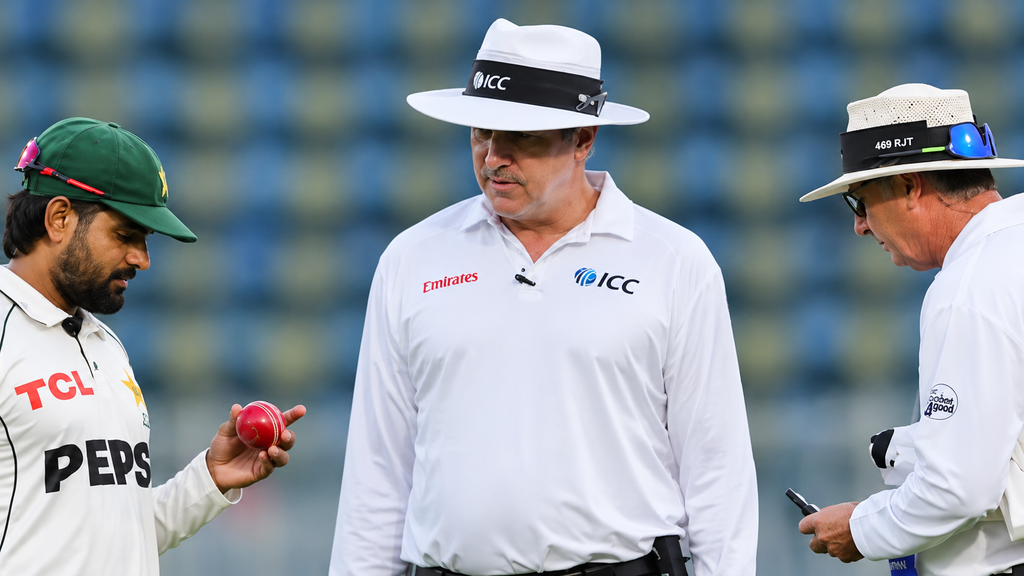
Even when the rain stayed away, visibility remained a concern. The umpires were forced to intervene as conditions deteriorated, making it increasingly difficult for batters to safely face the red ball.
Pakistan had attempted to address the issue by scheduling play to begin at 9:30 a.m., earlier than the usual starting time for domestic first-class matches.
However, early morning moisture and dew made an even earlier start impractical.
The match eventually ended in a draw after Pakistan batted through most of the final day, with Saud Shakeel falling short of a century for the second time in the match.
Play was called off at 4:18 p.m., almost two hours before the scheduled finish.
Winter Weather Creates Scheduling Problems
Hosting Test cricket during November, December and January has become increasingly challenging in parts of Pakistan.
Rawalpindi experiences early sunsets during winter, while Lahore and Multan frequently struggle with smog, fog and poor visibility.
These conditions have already forced the Pakistan Cricket Board (PCB) to change venues for international matches.
The second Test against Sri Lanka, originally scheduled for Lahore, was moved to Rawalpindi because of hazardous smog levels.
Pakistan has faced similar disruptions in previous years, including the relocation of matches involving Zimbabwe and New Zealand.
Karachi generally offers more favorable winter playing conditions, but ongoing renovation work at the National Stadium has limited its availability.
The situation leaves Pakistan with difficult decisions when scheduling home Tests during the colder months.
Could Pink-Ball Cricket Be the Solution?
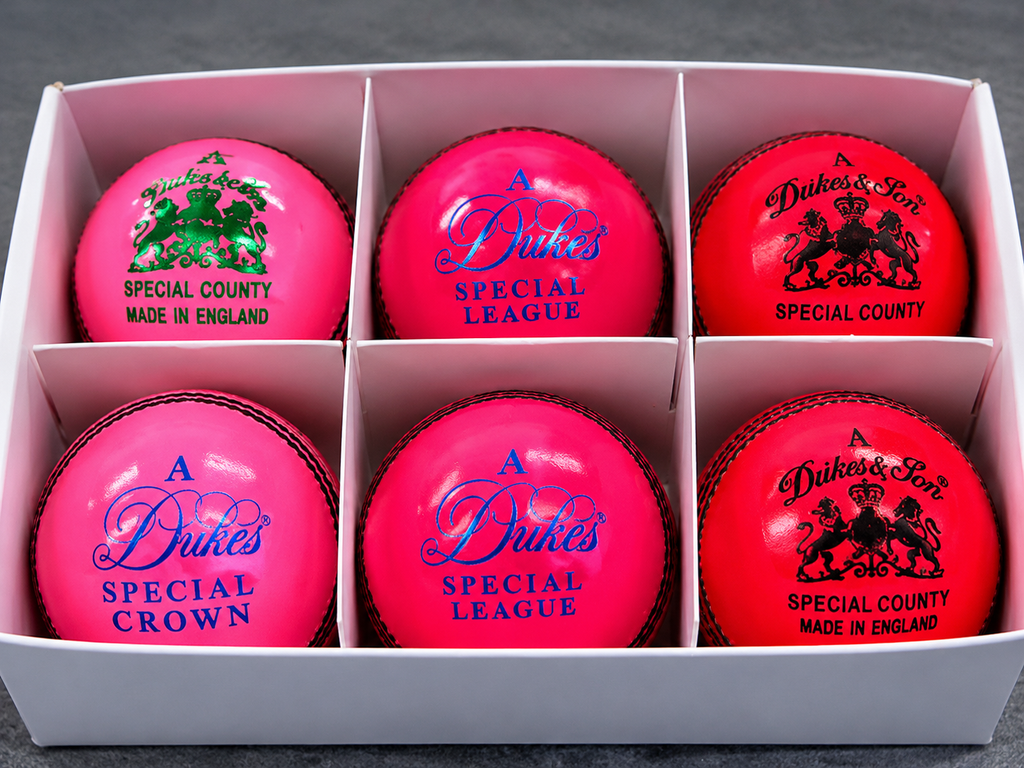
The ICC’s decision to permit pink balls in daytime Tests offers Pakistan a potential way to reduce the number of overs lost to poor light.
Unlike the traditional red ball, the pink ball is designed to remain more visible under artificial lighting, allowing matches to continue when natural daylight begins to fade.
However, introducing it would require careful planning, particularly because players are more accustomed to the red ball in conventional Test cricket.
For now, Pakistan and Sri Lanka will continue with the red ball in the second Test, with neither board pursuing a late switch.
But after another weather-affected contest in Rawalpindi, the discussion surrounding pink-ball Tests is likely to continue.
For Hesson and Babar, the priority is clear: finding a practical way to ensure more cricket is played and fewer Test matches are decided by the weather rather than performances on the field.