




Cricket Australia has rejected calls to reopen its investigation into the 2018 ball-tampering scandal, even as fresh allegations from Usman Khawaja and support from David Warner raise new questions about what really happened in South Africa.
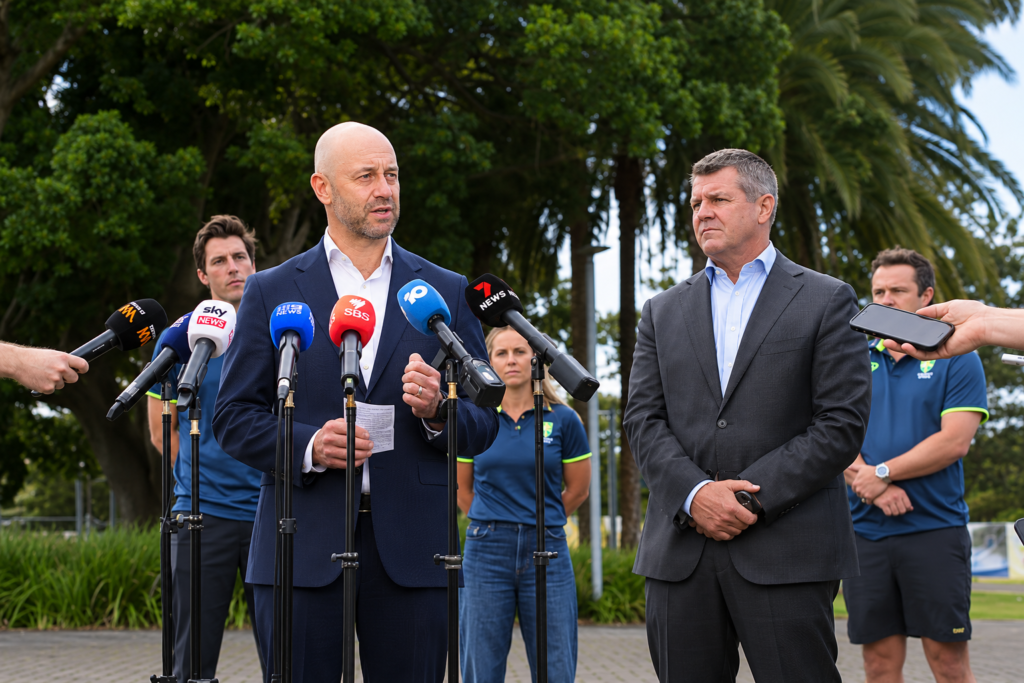
The Sandpapergate controversy is once again dominating Australian cricket, but Cricket Australia chief executive Todd Greenberg has made it clear that the governing body has no plans to revisit the original investigation.
Speaking to SEN on Tuesday, November 10, Greenberg defended the decision to move forward rather than reopen a case that led to lengthy suspensions for Steve Smith, David Warner and Cameron Bancroft.
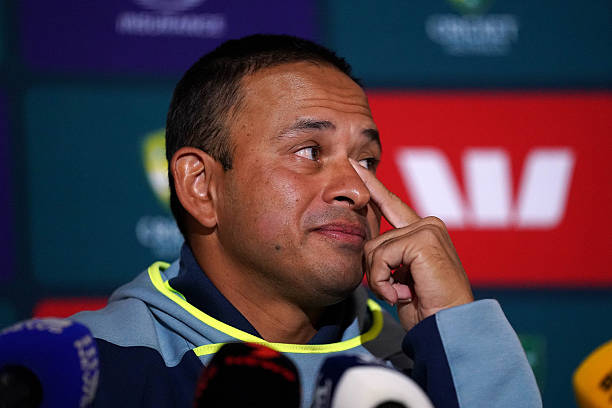
His comments follow the release of Khawaja’s autobiography Sabr, in which the veteran Australian batter challenges the accepted account of the scandal and argues that responsibility extended beyond the three players who were punished.
Todd Greenberg Says It’s Time to Move Forward
Greenberg believes another investigation would achieve little, particularly given the conflicting accounts that have emerged over the past eight years.
“There’s absolutely no benefit going back,” Greenberg told SEN, explaining that Cricket Australia’s board supports leaving the original investigation closed.
He acknowledged that different players have offered different versions of the same events, making it difficult to reach a conclusion that everyone would accept.
Rather than revisit decisions made in 2018, Greenberg wants Australian cricket to focus on the future.
However, his position is unlikely to satisfy those who believe important questions remain unanswered.
Khawaja Says the Entire Team Shared Responsibility
Khawaja’s autobiography has brought fresh attention to the events surrounding Australia’s 2018 tour of South Africa.
The experienced opener argues that the scandal should never have been treated as the responsibility of just three individuals.
Speaking to Nine ahead of his book’s release, Khawaja stressed that the entire Australian setup needed to acknowledge its role.
“It was all of us. Not the batters, not the bowlers, not the staff. All of us,” Khawaja said.
He also expressed frustration that, nearly eight years after the incident, the full story had still not emerged.
Khawaja maintains that he never wanted to be the person publicly revisiting the controversy. However, he felt compelled to share his account after waiting years for what he considers the complete truth to come out.
His book also raises questions about whether sandpaper was used during the preceding Test in Port Elizabeth, before the incident that was exposed in Cape Town.
Those allegations remain disputed.
David Warner Backs Khawaja’s Account
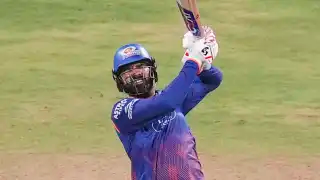
Former Australian opener David Warner has publicly supported Khawaja’s version of events, adding another layer to the growing controversy.
Warner, who received a 12-month suspension following the Cape Town scandal, has criticised Cricket Australia’s original investigation and questioned whether it was sufficiently thorough.
He has described Khawaja’s account as accurate and called for greater transparency over the handling of the case.
Warner’s intervention is significant because he was one of the central figures punished in 2018.
His support has also intensified debate over whether the investigation fully examined the involvement and knowledge of others within the Australian camp.
Despite his criticism, Warner has framed his comments around accountability rather than a desire to target former teammates.
Australia’s Bowlers Have Previously Denied Knowing About Sandpaper
One of the biggest points of disagreement concerns what Australia’s bowlers knew about the ball-tampering plans.
In 2021, Pat Cummins, Mitchell Starc, Josh Hazlewood and Nathan Lyon issued a joint statement denying knowledge that a foreign substance had been brought onto the field to alter the ball.
Their position remains an important part of the debate, particularly as Khawaja’s account suggests a broader level of responsibility within the team.
Greenberg acknowledged that some details in Khawaja’s book conflict with accounts previously provided by other players.
He urged caution when interpreting the allegations, arguing that Khawaja’s actual words should be considered rather than relying solely on headlines or public reactions.
The Cricket Australia chief also suggested that future autobiographies from other members of the squad could present further differing accounts of the same controversy.
Michael Clarke Wants the Full Truth
Former Australian captain Michael Clarke has taken a different position from Greenberg, arguing that the unresolved questions are precisely why the controversy continues to follow Australian cricket.
Speaking on 2DayFM Breakfast, Clarke said fans had never been given the clarity needed to put the scandal behind them.
He believes the opportunity to establish the full truth was missed in 2018 and again in 2021, when Bancroft’s comments reignited debate about who knew of the ball-tampering plans.
Clarke wants answers to two particularly important questions.
First, how many members of the Australian team knew that sandpaper was being used?
Second, did similar ball-tampering take place during the previous Test in Port Elizabeth?
For Clarke, resolving those questions is essential if Australian cricket wants to move beyond the controversy.
He argued that the continuing uncertainty has damaged public trust and left supporters unsure which version of events to believe.
What Happened During the 2018 Sandpapergate Scandal?
The controversy began during Australia’s third Test against South Africa at Newlands in Cape Town in March 2018.
Television cameras captured Cameron Bancroft attempting to alter the condition of the ball using yellow sandpaper.
The incident triggered widespread criticism and a major investigation by Cricket Australia.
Then-captain Steve Smith and vice-captain David Warner received 12-month suspensions, while Bancroft was banned for nine months.
Warner was also handed a lifetime leadership ban, which was eventually overturned in 2024.
The punishments became one of the defining moments in modern Australian cricket, with the scandal affecting careers, reputations and public confidence in the national team.
Although the three players eventually returned to professional cricket, questions about the wider team’s involvement have never entirely disappeared.
Current Australian Players Could Face More Questions
Greenberg expects the controversy to remain a topic of discussion as members of Australia’s current squad face the media.
He indicated that captain Pat Cummins and other players would likely be asked about the allegations in the coming days and weeks.
That could place renewed attention on players who were part of the 2018 tour and have previously addressed the scandal.
For Cricket Australia, the challenge is now managing a growing public debate while maintaining confidence in the findings of its original investigation.
For Khawaja, Warner and those calling for greater scrutiny, the issue remains whether the complete account of what happened has ever been established.
Sandpapergate Remains an Unfinished Story
Eight years after the Cape Town incident, Australian cricket is still divided over how much of the truth has been revealed.
Khawaja believes responsibility extended beyond the punished trio. Warner has backed his account. Clarke wants the unanswered questions examined.
Cricket Australia, however, remains satisfied with its original findings and has ruled out reopening the investigation.
The governing body’s decision may settle its official position, but it is unlikely to end the public debate.
With conflicting accounts still emerging and current players expected to face further questions, Sandpapergate continues to cast a shadow over Australian cricket.
For now, the central issue remains unresolved: whether the original investigation established the full extent of what happened in South Africa.